
External Affairs Minister S Jaishankar has said the recent confrontation between India and Pakistan was not just a mere conflict between two neighbours, but it was about combating terrorism, which will eventually come back to haunt the West.
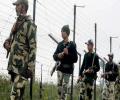
Border Security Force personnel later found human footprints heading towards the Pakistani side, raising the possibility of an unintentional border crossing.

The security cover of External Affairs Minister S Jaishankar has been upgraded from the 'Y' category to 'Z', official sources said on Thursday.

Kuwait has executed 25 Indian nationals in the past five years.
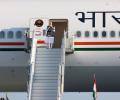
The Kananaskis gathering on June 16-17 is the Prime Minister's 6th consecutive participation in the G7 Summit.
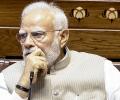
China welcomes Prime Minister Narendra Modi's planned visit to the Tianjin Summit of the Shanghai Cooperation Organisation (SCO), expressing hope that the event will be a 'gathering of solidarity, friendship and fruitful results'.

A big question mark is on whether Shashi Tharoor, who had led the delegation to the US among other countries, will be picked as speaker by the Congress, as the seasoned Lok Sabha member's enthusiastic endorsement of the government's action following the terror attack has soured his ties with his party.
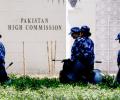
Pakistan has expressed condolences over the deaths of tourists in a terror attack in Pahalgam, Jammu and Kashmir, that killed 26 people. The Foreign Office spokesperson said Pakistan is concerned at the loss of tourists' lives and wished the injured a speedy recovery. The attack, claimed by The Resistance Front (TRF), a proxy of the banned Pakistan-based Lashkar-e-Taiba (LeT), is the deadliest in the Valley since the Pulwama strike in 2019.
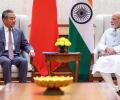
China's Foreign Minister Wang Yi expressed China's anticipation for Prime Minister Narendra Modi's visit to the Shanghai Cooperation Organisation (SCO) summit, emphasizing the importance of strong India-China relations and mutual cooperation.

Former US National Security Advisor John Bolton says President Trump's policies have damaged US-India relations, pushing New Delhi closer to Russia and China.
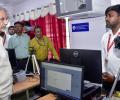
External Affairs Minister S Jaishankar said the 2008 Mumbai terror attack marked a turning point in relations with Pakistan when Indians collectively felt that such behaviour from a neighbouring country could no longer be tolerated. Speaking at Charotar University of Science and Technology, Jaishankar acknowledged India's transformation under Prime Minister Narendra Modi over the last decade, while Pakistan has remained unchanged, continuing with what he termed as its "bad habits."

Prime Minister Narendra Modi's aircraft was escorted by Saudi F-15 jets as it entered Saudi Arabian airspace on Tuesday, highlighting the deepening defence cooperation between the two countries. Modi is on a two-day visit to the country and is expected to discuss boosting defence ties with Saudi Crown Prince Mohammed bin Salman. In an interview before his arrival, Modi described Saudi Arabia as "one of India's most valued partners, a maritime neighbour, a trusted friend and a strategic ally."
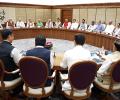
The diplomatic exercise aimed at presenting India's stance against Pakistan on terror comes in the wake of Operation Sindoor -- the Indian offensive against terror camps in Pakistan and Pakistan-occupied Kashmir following the April 22 terror attack in Pahalgam in which 26 people, mostly tourists, were killed.
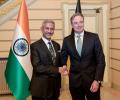
The era where nations thrived through rigid alignments is giving way to an age where the connective State defines power. For India, that era has arrived, points out Dr Nishakant Ojha.
India has summoned Bangladesh's acting High Commissioner, expressing concern over recent statements by Bangladesh authorities that "portray India negatively" and hold New Delhi responsible for internal governance issues. The Ministry of External Affairs said India desires a positive relationship with Bangladesh, but these statements "vitiate the atmosphere" and are "responsible for persistent negativity." The statement comes after Bangladesh's interim government accused deposed Prime Minister Sheikh Hasina of "provocative" statements from India that led to unrest in Bangladesh.
Prime Minister Narendra Modi is likely to address the UN General Assembly in September. The session will address global conflicts and trade negotiations between the US and India.
While there are some new faces in the cabinet, leaders such as BJP president JP Nadda and Jual Oram have returned as ministers.
Prime Minister Narendra Modi held a series of bilateral meetings with his global counterparts on the margins of the G7 Summit in Kananaskis, with discussions focusing on a range of issues such as trade, investment, counter-terrorism and global challenges.
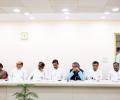
Tharoor also said he is honoured by the invitation of the government to lead an all-party delegation to five key capitals to present the nation's point of view on recent events.
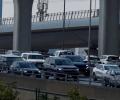
Nine Indian nationals were killed in a road accident near Jizan in western Saudi Arabia. The Indian mission in Jeddah said it is providing full support and is in touch with the authorities and families.

The CCS meet was held at the prime minister's Lok Kalyan Marg residence, a day after he held a meeting with the top military brass and accorded operational freedom to the armed forces on the "mode, targets and timing" of India's response to the April 22 attack that killed 26 people.

Opposition parties have agreed to the agenda of taking up a special discussion on the Pahalgam terror attack and Operation Sindoor on Monday in Lok Sabha and the next day in Rajya Sabha, brightening up the prospect of normalcy returning to Parliament after the virtual washout of first-week proceedings.
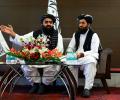
'During the 5-day visit, Amir Khan Muttaqi would have, conceivably, bumped into our powerful security agencies one way or another and some interaction would have ensued, which, in turn, can lead to future dealings.' 'Indeed, this will be the one crucial template of the Indo-Afghan relationship that Pakistan will be monitoring closely,' points Ambassador M K Bhadrakumar.

An influential US lawmaker claims his visit to India helped catalyze "early signals" that New Delhi may reduce its imports of Russian oil, a step he described as "meaningful" in weakening Moscow's ability to fund its war in Ukraine.
US Secretary of State Marco Rubio spoke separately with External Affairs Minister S Jaishankar and Pakistani Deputy Prime Minister and Foreign Minister Ishaq Dar, State Department Spokesperson Tammy Bruce said in a statement early Saturday.
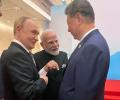
The relations between New Delhi and Washington are on a downturn after Trump doubled tariffs on Indian goods to a whopping 50 per cent, including a 25 per cent additional duties for India's purchase of Russian crude oil.
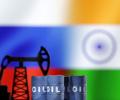
India's crude oil imports from Russia strengthened in the first half of October, reversing a three-month slide in arrivals seen during July-September as refineries were back on full stream to meet festive demand, according to ship tracking data.

The government of India was suspected of using proxy agents to provide "clandestine financial support" to candidates from three political parties in a federal election, Canadian newspaper The Globe and Mail reported.
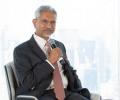
Jaishankar said that the Pahalgam attack "was an act of economic warfare. It was meant to destroy tourism in Kashmir, which was the mainstay of the economy. It was also meant to provoke religious violence because people were asked to identify their faith before they were killed."
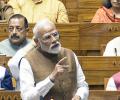
What was the aim of Operation Sindoor? Why was the operation halted so soon? asks Lieutenant General Prakash Katoch (retd).
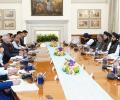
The opposition on Saturday termed the absence of female journalists from a press conference of visiting Afghan Foreign Minister Amir Khan Muttaqi "unacceptable" and an "insult to women", and said Prime Minister Narendra Modi's silence in the face of such discrimination exposes the "emptiness" of his slogans on Nari Shakti.

The comments came a day after US President Donald Trump said that Washington is "very close" to the trade pact with India.
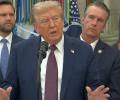
"I understood tariffs better than any human being in the world. And now with my tariffs, they were all dropping them. India was the most highly tariffed nation... And you know what, they've offered me no tariffs in India anymore. No tariffs," Trump said.

Ukraine's First Deputy Foreign Minister Emine Dzhaparova will pay a four-day visit to India from Sunday, the first official visit from the East European country since the Russian invasion began last year.
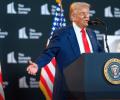
He added that India sells to the US, its biggest "client", "massive" amounts of goods, "but we sell them very little - Until now a totally one sided relationship, and it has been for many decades."
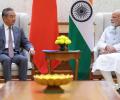
'New Delhi is not naive about its foreign policy choices.'

Subrahmanyam Jaishankar and Taranjit Singh Sandhu were colleagues at the ministry for external affairs for many years.
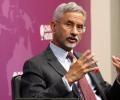
"From President Trump's perspective, the one big shared enterprise that we have is the Quad, which is an understanding where everybody pays their fair share. There are no free riders involved. So that's a good model which works," he said. The Quad alliance consists of the US, India, Australia and Japan.

India and Pakistan exchanged lists of their nuclear installations on Wednesday, fulfilling a decades-old agreement that prohibits attacks on each other's atomic facilities. The exchange took place amid strained relations between the two countries over the Kashmir issue and cross-border terrorism. The agreement, signed in 1988, mandates the annual exchange of such lists, which has occurred for the 34th consecutive year.
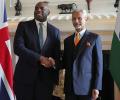
India's External Affairs Minister S Jaishankar has stated that the US administration under President Donald Trump is moving towards multipolarity, which aligns with India's interests. He also revealed that India and the US have reached an agreement on the need for a bilateral trade pact. Jaishankar touched upon various foreign policy issues including India's role in the Russia-Ukraine conflict, the trajectory of the BRICS grouping, and relations with China during a session at the Chatham House think-tank in London.
